The Art of Darkness

Adventures in Beekeeping

April 5th, 2010 by Cobwebs

BeeIn my continuing effort to have acquaintances say, “You do what?” whenever they speak to me, I’ve recently added beekeeping to my list of hobbies.

Suburban and even urban beekeeping is increasing in popularity, and since it’s a subject I’ve been interested in for quite some time I finally decided to take a class offered by my local beekeeping club.* They’re an enthusiastic and friendly bunch, and like many gonzo hobbyists they’re eager to make all of us love their hobby as much as they do.

The classes have been interesting, covering topics ranging from sustainable pest management to how to bribe your neighbors so they don’t object to you keeping 50,000 stinging insects next door.** They even assigned each of us a mentor–mine bears a striking resemblance to a young Dumbledore–to help us get started. (Which is good, because there is one heck of a lot of new information to absorb.)

I hived my first package of bees last weekend, and as is apparently traditional I have named the queen. Lilith (queen of the damned) and her minions are buzzing around in my front yard, and I couldn’t be happier.

Shadow Jack, incidentally, has suggested that we eventually might sell beeswax and honey on the site, claiming that the products are the work of “zom-bees” using nectar collected exclusively from funeral lilies. Shadow Jack has a screw loose.

Anyway, bees. If you’re interested in exploring the hobby, check to see if there’s a local club you can join, take a look at books such as The Backyard Beekeeper or Beekeeping for Dummies, and look for relevant blogs (like Backwards Beekeepers) and forums (like Beesource). Come…join us. We have honey!


*Minor digression: In the first class we went around the room and explained why we were interested in beekeeping. One person had a small orchard and wanted to improve pollination. A couple of people wanted to help stave off CCD. When they got to me I joked, “My husband won’t let me keep goats, so I figured I could get away with smaller livestock.” At the break, three different women approached me and commiserated about the goats. A few weeks later I called a bee equipment supplier to order my hive, and while the nice lady was processing my order she asked why I was taking up the hobby. I explained that I’d been interested in it for a while, then made the same, “plus my husband refuses to let me keep goats” joke I’d made in class. She immediately said, “My husband won’t let me keep goats either!” There is apparently a huge number of women whose goat-havingness is being thwarted by our husbands, and we’re all turning to beekeeping to console ourselves. Someday we will raise an apian army and sting the bastards.

**They also recommended that we have our doctor write a prescription for an Epipen, even if we weren’t allergic. Just in case. This is the first hobby I’ve ever considered that has the potential to kill you. It’s awesome.

(Bee photo courtesy of Empress Pam, who watched the hive install.)

Posted in Unhallowed Ground | 9 Comments »
Organic (and Gothic) Pest Control

June 10th, 2009 by Cobwebs

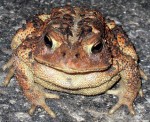
Toad Photo by Flickr User bdjsb7Now that summer is nearly here, the toads are emerging from their lairs and many of my evenings are spent chasing them around so I can pick them up and pet them. (Meanwhile, Shadow Jack trudges stolidly behind, wondering how he ever wound up saddled with a lunatic who pets toads. But I digress.)

In addition to being cute, toads are also a fantastic natural pest control for the garden. I like to encourage organic, pesticide-free gardening, so here are some gothy creatures to help keep out the bad bugs:

Toads eat all kinds of insects, grubs, and slugs, and they’re supposed to be good luck. Provide them with some water to drink and to lay their eggs (it doesn’t have to be a pond; anything that doesn’t dry out will do). Give them shelter, both in the form of rock piles and vegetation where they can hide and a cool, damp “toad abode” where they can get out of the sun and away from predators (you can buy elaborate toad houses, but a clay pot turned on its side and halfway buried in the ground is fine). Avoid spraying pesticides or other harsh chemicals; toads and frogs are very susceptible to poisoning. Keep cats under control to prevent them from snacking on toads (both for the toad’s sake and the cat’s; some toads are poisonous).

Lizards eat a variety of insects and can be attracted by giving them places to hide (such as a rock pile or a stack of logs), a shallow water source near the ground, and some flat rocks to sun on.

Snakes will be attracted by the same conditions that lizards like. Although they might eat helpful species like lizards and toads, they also eat rodents. (I think the tradeoff is worth it; there’s nothing that ticks me off more than finding a mouse’s nest in a basement storage box, and I love seeing the occasional shed skin that lets me know our snakes are on patrol.) It should go without saying that you shouldn’t try to pick up a wild snake, and make sure children and pets won’t be bitten.

Bats are nonpareil bug-eaters, and nothing could be gothier. I’ve gone into detail about attracting bats here.

Read the rest of this entry »

Posted in Unhallowed Ground | 4 Comments »

Theme Garden: Black Magic

April 20th, 2009 by Cobwebs

Bela Lugosi DaylilySpring has sprung, and plants are clawing their way out of the ground like something from a bad horror movie. Now’s the time to think about planting a few flowers and accent plants that will bring a little spookiness to the surroundings.

One excellent way to goth up the garden is to plant flowers in dark and dramatic colors. Although there aren’t many “true” black flowers there are lots that are fairly close, and there are plenty of other dark scarlets and purples to choose from. (As a bonus, many dark flowers have appropriately gothy names, like the daylily “Bela Lugosi” or the amazing Black Bat Flower.)

Remember when using black in the garden that less is more: An all-black planting can look homogenous and boring, but placing black flowers against a lighter background or using them to accent other colors (silver artemisia, scarlet roses, white lilies…even orange pansies if you’re in a Halloweeny mood) can lend a wonderfully sinister style to the outdoors. If you don’t have room for a garden, you can also mass black plants in a patio pot to create a dramatic focal point. Keep in mind that dark plants may need additional watering, since they tend to wilt a little faster in the sun.

Note that there’s a lot of weirdosity in the flower-naming world, so just searching for flowers with “black” in the name doesn’t always work. (For instance, the “Black Madonna” rose and “Black Velvet” geranium are both bright red.)

There are loads of black(ish) plants to choose from, but here are some that are fairly easy to find and reasonably easy to grow.

Iris:
“Sambuca German” iris
Chrysographes iris
“Superstition” iris
“Study in Black” iris
“Hello Darkness” iris
“Before the Storm” iris
“Paint it Black” iris
“Midnight Fragrance” iris
“Black Tie Affair”
“Black Gamecock”
“Night Ruler”
“Night Owl”
Dark Vader”

Rose:
“Black Baccara”
“Abrakadabra” (second photo)
“Midnight Blue”
“Taboo”
“The Squire”
“Souvenir du Docteur Jamain”
“Papa Meilland”
“Deep Secret”
“Cardinal de Richelieu”
“The Prince”

Tulip:
“Queen of the Night”
“Black Diamond”
“Black Parrot”
“African Queen”
“Blue Parrot”
“Black Hero”

Read the rest of this entry »

Posted in Unhallowed Ground | 3 Comments »

Theme Garden: Faeries (and Butterflies)

March 10th, 2009 by Cobwebs

Amid Hummers Night's DreamOkay, if you want to get technical, this garden will probably attract more butterflies and hummingbirds than faeries. However, it’s the thought that counts, and who’s to say for sure whether that little creature that just whizzed past was a hummingbird or one of the Wee Folk?* (Besides, tradition has it that faeries are attracted to gardens where butterflies are plentiful, so you might just get lucky.)

The garden can be as large or small as space allows, and in a pinch nothing more elaborate than a window box or a few flowerpots will suffice.

The first step is to make your garden attractive to wildlife in general: Avoid pesticides, make sure there’s a water source (such as a birdbath or small fountain), and provide shelter: Siting the garden near woods or a dense hedge is ideal, but a smaller garden can use a birdhouse or even a clay flowerpot turned on its side instead.

Hummingbirds and adult butterflies both like plants that produce a lot of nectar, but butterflies also appreciate “host” plants that their caterpillars eat: Check with your local wildlife extension about host plants. It’s best to select plant species which are native to your area, since they’ll not only grow best but they’ll also attract the most butterflies. Try to arrange your plant selection so that something is in bloom throughout the growing season. A “cottage”-type garden with a slightly overgrown look and a variety of flowers is perfect for this (and gets extra points because it’s lower maintenance).

There are loads of plants which are suitable for this type of garden, including:

Read the rest of this entry »

Posted in Unhallowed Ground | 1 Comment »

Theme Garden: Bats

February 11th, 2009 by Cobwebs

Spring will be here before we know it (at least it better be, lest I get all stabby), so it’s time to start thinking about next year’s garden. If you’re looking for an interesting theme, why not try a Bat Garden?

First, check with your local wildlife extension office to see what kind of bats are native to your area. If you have nectar-eating bats, you’ll want to plant fragrant night-blooming flowers. If (more likely) you’ve got insect-eaters, you should choose plants that attract insects.

For nectar-eaters, choose flowers that:

  • Bloom at night
  • Are large (at least 1″ or more)
  • Are pale-colored or white
  • Are very fragrant and have lots of nectar

In the American southwest, Agave plants or Saguaro cacti are a good choice. Guava, moonflower, night-blooming gladiolus, passion flowers, sand verbena, tufted primrose, sacred datura, desert tobacco, gilias, and night-blooming cereus are other possibilities. (There are also reports of hummingbird feeders being hijacked by nectar bats, so as a last resort you might hang up one or two of these.)

For insect-eaters, you’ll want to choose plants and create an environment that attracts night-flying insects such as moths. Fragrant night-blooming plants include four o’clocks, heliotrope, silene, evening primrose, nicotiana, cornflowers, evening stock, salvia, phlox, sweet rocket, soapwort, dame’s rocket, gardenia, eastern false aloe, joe-pye weed, and jasmine. You can also choose herbs for double duty, in the kitchen and to attract bats. Good choices are sage, borage, oregano, lemon balm, marjoram, chives (let some of them flower), and all of the mints (spearmint, apple mint, chocolate mint, pennyroyal, pineapple mint, peppermint).

Check to see what kind of conditions these plants like: Depending upon your region, it might be better to grow some of these plants in pots and take them inside during the winter.

Read the rest of this entry »

Posted in Unhallowed Ground | 1 Comment »

Bat Trellis

December 23rd, 2008 by Cobwebs

Bat TrellisOver on the Halloween-L listserv, haunter extraordinaire Screamin’ Scott posted photos of his 2008 yard display. I was particularly taken with his awesome cemetery entrance gate, which included these decorative bats.

He commented that he was trying for a “Halloween trellis” look, which struck me as a fantastic year-round use for something similar. The bats could be cut out of wood or heavy plastic using a jigsaw (or you could get really ambitious and have a local metalworker make them from wrought iron), then anchored with standard trellis posts. They’d look wonderful with ivy or climbing roses twining around them.

Posted in Unhallowed Ground | Comments Off on Bat Trellis

Unhallowed Ground

December 19th, 2008 by Cobwebs

Calla LiliesI’ve been meaning to do the occasional post about goth gardening for a while now but keep getting distracted by shiny objects. I’m finally ready, so let’s all ignore the fact that I’m talking about gardening in the dead of winter. (Readers in the Southern Hemisphere, this one’s for you.)

Despite the very real danger of winding up with a tan, gardening is a rewarding hobby and offers an excellent opportunity to extend your personality to the outside of your home. With a little effort, anything from a proper Victorian front garden to a Goreyesque my-yard-eats-the-occasional-passerby vibe can be achieved.

Incidentally, even if you don’t have a yard you can still indulge in a little gardening: Many plants are perfectly happy living in pots. I particularly like using strawberry jars for container gardening, putting a different plant in each pocket. HGTV has instructions for planting and caring for a strawberry-jar garden, if you aren’t sure how to proceed. If you have absolutely no access to the outside, you can grow plants in a sunny window or in a terrarium. Here’s a short primer on setting up a simple terrarium.

If you’re new to gardening (or if you have a black thumb), herbs are a good choice for a starter garden. They tend to be fairly hardy and resistant to drought and disease, plus you can use them for cooking or crafts. They’re also lovely landscaping plants if you have the room: They come in a variety of colors, so it’s possible to put together, say, an all-silver herb planting.

You can grow a selection of herbs for culinary use (rosemary, sage, basil, dill, mint, tarragon, parsley, chives, thyme), for herbal teas (peppermint, lemon verbena, chamomile, lemon balm, spearmint, lemongrass, sweet woodruff), beauty products (lavender, mugwort, wormwood, tea roses, marigolds), or natural dyes (alkanet, bloodroot, clematis, coreopsis, lady’s bedstraw, yarrow).

It’s also easy to grow an abundance of herbs for projects like wreaths or sachets, it’s much much cheaper than purchasing the same quantity of material, and the quality is almost always better, to boot.

You can go also darker. Before Shadowboy came along I had a poison garden featuring henbane, monkshood, deadly nightshade, wolfsbane, belladonna, and many others (Richters Herbs carries an extensive selection). These plants tend to like shady, damp conditions, so my little garden was a perfect fit for an area where sun-loving plants wouldn’t grow. (Obviously, if you have small children or pets that are likely to eat stuff at random, a similar garden would be a Very Bad Idea.)

If herbs aren’t really your thing, consider a theme garden. As the name suggests, these are gardens devoted to a particular subject (one popular choice is a selection of plants mentioned in Shakespeare’s works). You can choose any theme that strikes your fancy: Traditional witches’ plants, plants with “blood” in their name (bloodroot, bleeding heart, blood lily), or plants reputed to attract fairies (bluebells, forget-me-not, jasmine, white lotus).

There’s no reason why “spooky” should stay inside the house. Slather on the sunblock, grab a trowel, and let your darker side out to play.

Posted in Unhallowed Ground | Comments Off on Unhallowed Ground

Doomies

December 2nd, 2008 by Cobwebs

DoomieI’m trying to figure out how to write this post without making it sound like the plot of a Fellini film, but that may not be possible.

Okay, Doomies are little garden “gnomes” (their word, not mine) that look like the grim reaper and also can be used as incense smokers. Makes…perfect sense.

From the very scant information on their site, I suspect that they’re based in the Netherlands. They sell handmade ceramic Doomies in three sizes ranging from 11-28 € (about $13-35) but there’s no information about whether they ship internationally.

Still, I’m rather taken with the idea of a miniature reaper stalking around my garden and scowling at chipmunks.

Their other product is Rebirdy, a birdhouse shaped like a skull. The birds enter and leave through the eye holes. That’s sort of awesome too.

Posted in Unhallowed Ground | 1 Comment »

Garden Sculpture Zombie

July 10th, 2008 by Cobwebs

Zombie SculptureDesign Toscano offers a variety of unique statues and decorative items, and they’ve just released a garden sculpture that’s right up our alley.

Their “Zombie of Montclaire Moors” is a life-sized undead guy who appears to be clawing his way out of your lawn.

He appears to be a little clean-cut for a zombie, but this sure beats the heck out of a garden gnome.

Link (via BoingBoing)

Posted in Unhallowed Ground | 1 Comment »

Build a Bat House

June 17th, 2008 by Cobwebs

Bat HouseShadow Manor is blessed with a small bat colony, and one of my favorite summer activities is sitting outside at twilight and watching bats flit overhead.

As bats lose their natural habitat to development, it’s important to provide them with alternate roosting spaces. If you’ve got any patch of greenery near your home there might be bats closer than you think, so why not build a house to encourage them?

The basic design is pretty straightforward; it’s really just a wooden box with some interior partitions. There’s a great tutorial for building a bat house at The National Wildlife Federation. Free plans are also available at Scott’s Bat House Page and The Organization for Bat Conservation, and Googling “bat houses” will turn up dozens more.

If you’d rather buy than build, most birding supply stores and some large hardware chain stores carry ready-made houses. They’re also available many places online; Bird Sanctum has some nice basic models that aren’t too expensive, and the Backyard Bird Company has some fanciful designs that include a Bat Castle and Victorian Bat House.

Bat Conservation International has some information on the criteria for a successful bat house, as well as suggestions for attracting bats, and Bat World lists some frequently-asked questions about bat houses and offers tips for proper siting.

Some people may be reticent to invite bats into their lives due to fear of rabies. This is an unfortunate misconception; in reality you’re more likely to get rabies from a cow than from a bat. As the CDC points out, the disease is only transmitted via a bite or through infected material (such as saliva) getting into your eyes, nose, mouth, or an open wound. Don’t handle the bats (don’t handle any other wild animal you might run across, either), teach your kids to do the same, and you’ll be fine.

Build a house, put it up, and soon you too might have the opportunity to spy the little night mice flitting happily overhead.

Posted in Doom It Yourself, Unhallowed Ground | 3 Comments »

« Previous Entries Next Entries »